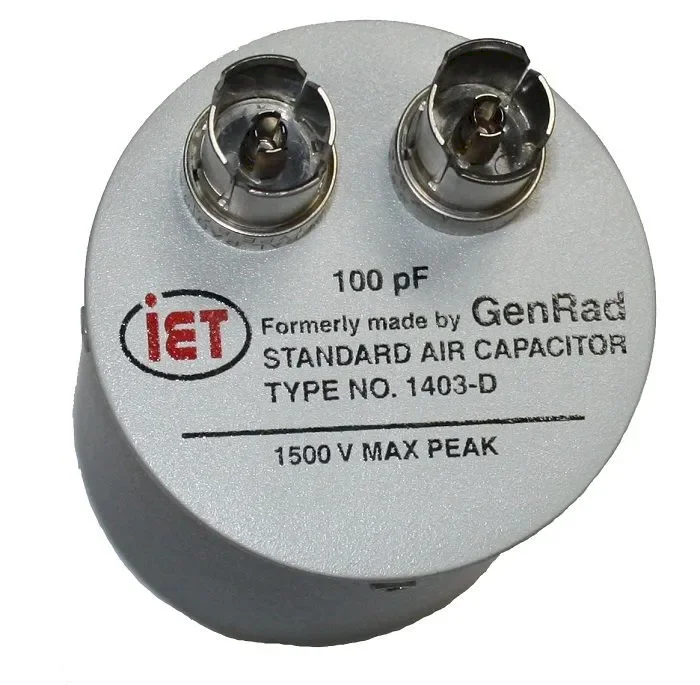
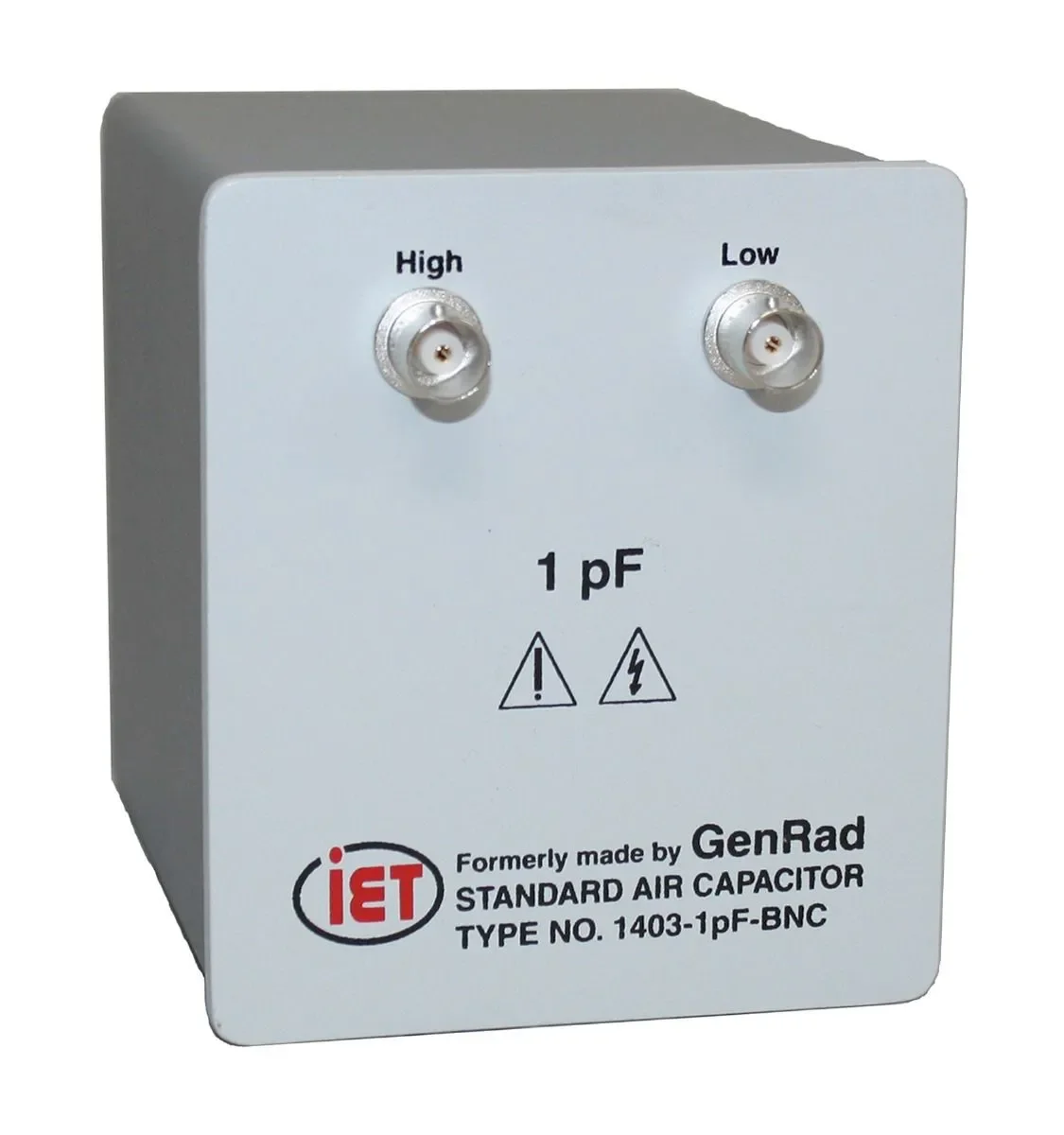
- Available in values from 0.001 pF - 1000 pF
- Excellent performance at high frequencies
- ISO-17025 accredited calibration included with the standard
- NEW 1403-1pF-BNC and 1403-0.001pF-BNC versions
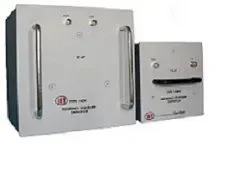
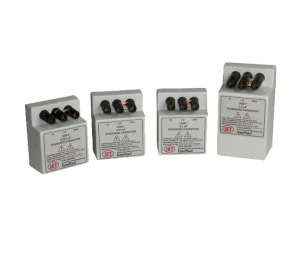
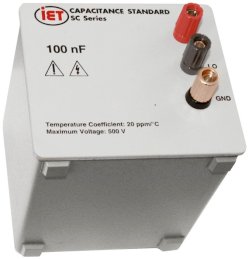
GenRad 1403 Series High Frequency Standard Capacitor1403 GenRad
IET Labs / GenRad 1403 Standard Air Capacitors
The 1403 Standard Air Capacitors are stable, three-terminal standards with values from 0.005 pF to 1000 pF. Capacitance changes by less than 0.01% at frequencies up to 2 MHz for the 1 pF standard and up to 200 kHz for the 1000 pF standard. This makes them well suited to verifying LCR meters and bridges at frequencies other than 1 kHz. For details, see the application note “1403 Air Capacitors for Calibration of the 7660 Precision LCR Meter and other LCR meters”.
Key features
- Stability better than 0.05% per year
- Excellent performance at high frequencies
- Extremely low dissipation factor
- Low temperature coefficient
- Performance well documented by nationally recognized laboratories
Connections
The terminals plug directly into the UNKNOWN terminals of the Type 1620 Capacitance Bridge or an equivalent such as the AH2500A Ultra Precision Capacitance Bridge. The 1403 has traditionally been built with GR 0874 connectors. Newer 1403-BNC versions have BNC connectors for easy connection to a wide range of LCR meters and bridges. All 1403s have shielded terminals, both connected to the case.
Design
- Stacked-plate models: the 1403-A, 1403-D and 1403-G have nominal values of 1000 pF, 100 pF and 10 pF. Their construction is conventional and similar to the 1404 series, using interleaved stacks of aluminum plates (the 1404 uses Invar). Each plate is insulated from the supporting panel and housing.
- Aperture design for 1 pF and below: stacked plates are not practical at these values, so the capacitor uses two electrodes separated by a guard plate. The shielding of the guard plate reduces stray capacitance between the active electrodes to nearly zero. The capacitance depends on the opening (aperture) in the guard plate and on the spacing between the electrodes. The effective area of the aperture is slightly smaller than its diameter would suggest, an effect described as “negative fringing” of the electric field.
- Very low losses: there is no solid dielectric in the direct capacitance field, so losses are extremely low, typically below 20 ppm (a dimensionless value).
- Three-terminal connection: at 100 pF and below, a three-terminal connection increases accuracy by removing the uncertainty from the capacitance between the terminals and ground. This also improves performance with LCR meters.
Documented performance
The 1403 has been studied extensively, and its behavior versus frequency, barometric pressure and temperature is well documented:
- “The Measurement and Uncertainty of Air Dielectric Capacitors from 1 kHz to 10 MHz” gives useful data on how capacitance changes with barometric pressure, relative humidity and temperature.
- “Establishment of 2TP air-dielectric capacitance standard for 1 pF, 10 pF, 100 pF and 1000 pF in the frequency range up to 10 MHz by resonance frequency at NIMT” describes calibration of the 1403 at up to 1 MHz for use in calibrating LCR meters.
Calibration conditions
IET Labs calibrates the 1403 at its facility in West Roxbury, MA. The elevation is about 115 ft (35 m) above sea level, which corresponds to an air pressure of roughly 101,000 Pa. Because the capacitance of an air capacitor depends on pressure, this value matters when the standard is used at a different elevation.